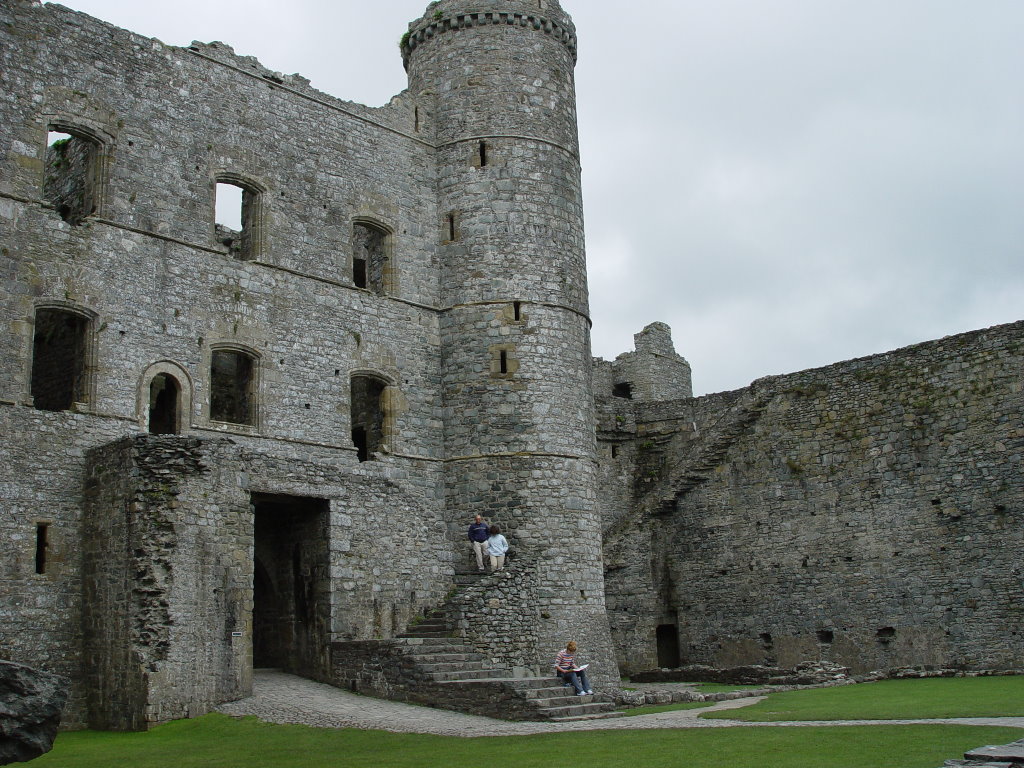
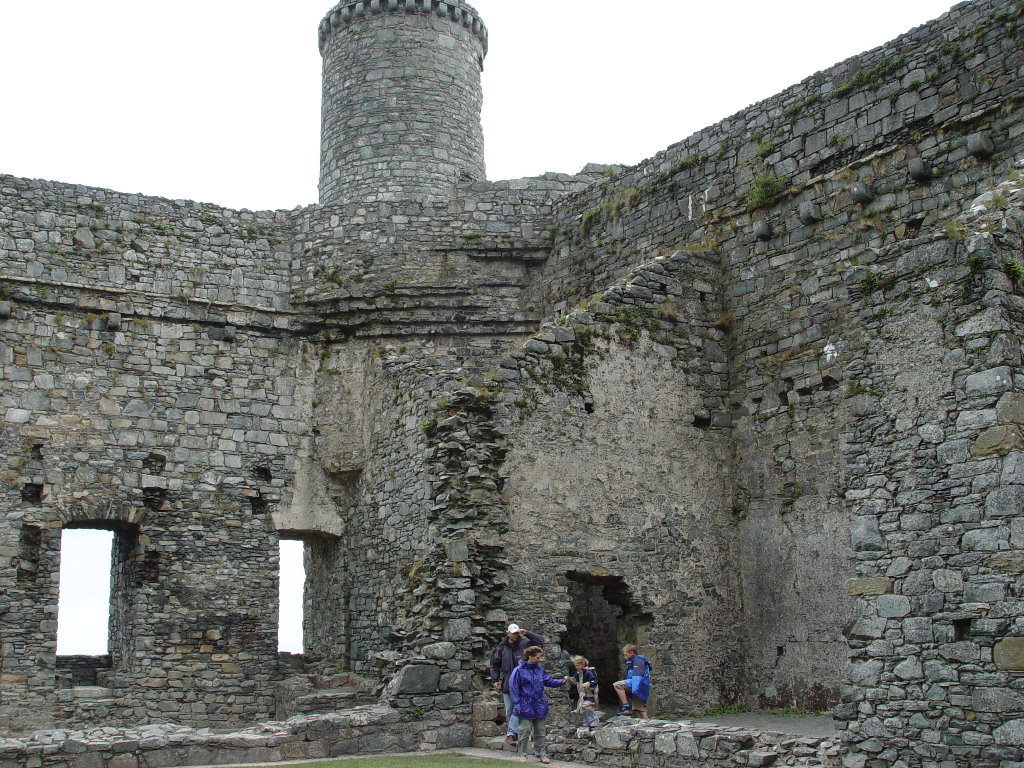
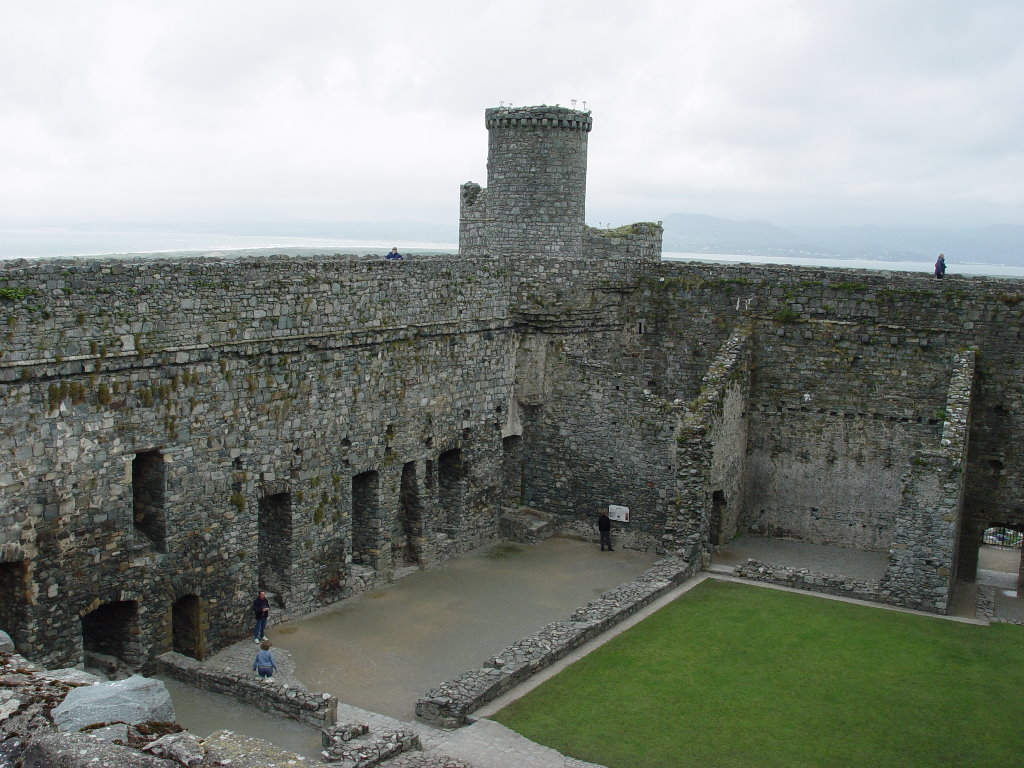
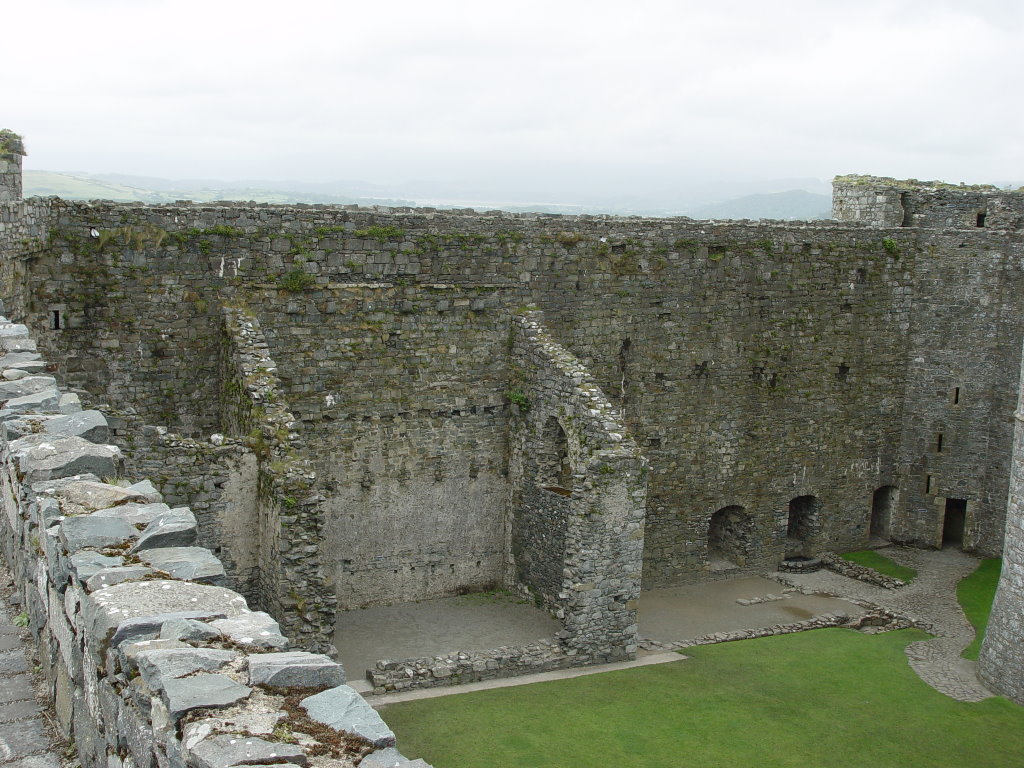
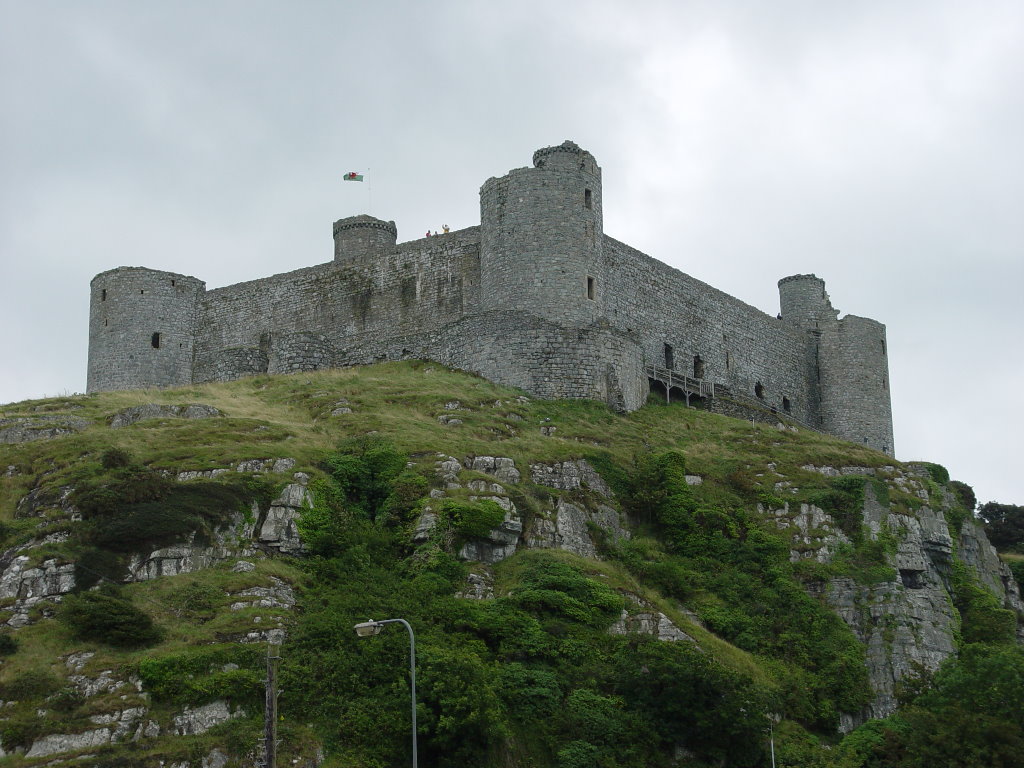
Few castles anywhere look as much like a castle as Harlech. It sits on a crag of hard rock above the coastal plain, with the sea on one side, the mountains of Eryri on the other and the town gathered at its back. Edward I built it in the 1280s to hold down north-west Wales, and over the next four centuries it was fought over by Welsh princes, Lancastrians and Royalists. Today it is cared for by Cadw and is one of the four castles in the UNESCO World Heritage Site of the Castles and Town Walls of King Edward in Gwynedd.
| At a glance | |
|---|---|
| Built | 1283 to 1289, for Edward I |
| Architect | Master James of St George |
| Recorded cost | About £8,190 |
| Type | Concentric castle on a rocky crag |
| Status | Cadw monument, Grade I listed, UNESCO World Heritage Site |
| Time to allow | 1 to 2 hours |
| Facilities | Visitor centre, café, shop, accessible toilets, bike storage |
| Dogs | Welcome |
Why it was built
In December 1282 Llywelyn ap Gruffudd, the last native Prince of Wales, was killed near Builth, and Edward I set about securing his conquest of Gwynedd with a ring of new castles. Work at Harlech began in May 1283, under the direction of the master mason James of St George, the Savoyard who also designed Conwy, Caernarfon and Beaumaris.
The scale of the operation was enormous. At its peak, almost 950 men were working on the castle, including 227 stonemasons, 115 quarriers, 30 blacksmiths and 22 carpenters. The castle was essentially complete by the end of 1289, having cost around £8,190. That was a large sum, but only around a tenth of what Edward spent on castles in Wales, and far less than Caernarfon or Conwy. A small planned town, the first Harlech, grew up beside it. See Building Harlech Castle.
How it was designed
Harlech is a concentric castle: a strong inner ward surrounded by a lower outer wall, so that defenders on the high inner walls could shoot over the heads of those on the outer ones. The design makes the most of the rock. On the landward east side the approach is guarded by a deep ditch cut into the rock and by the great gatehouse; on the other sides the crag falls away steeply.
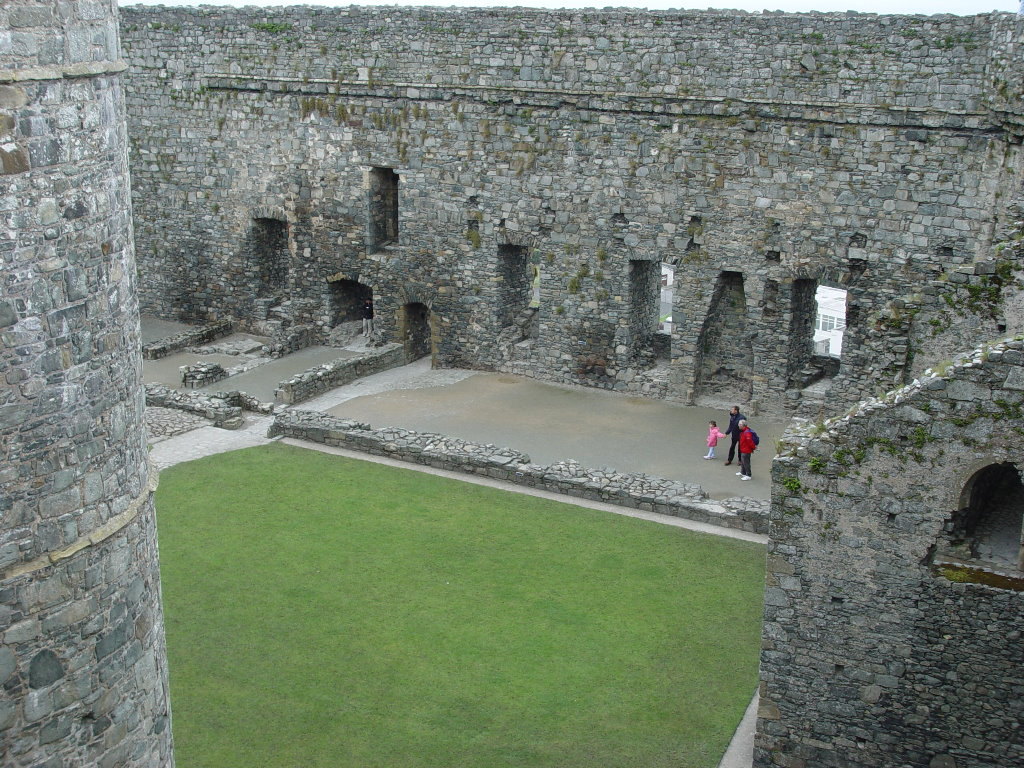
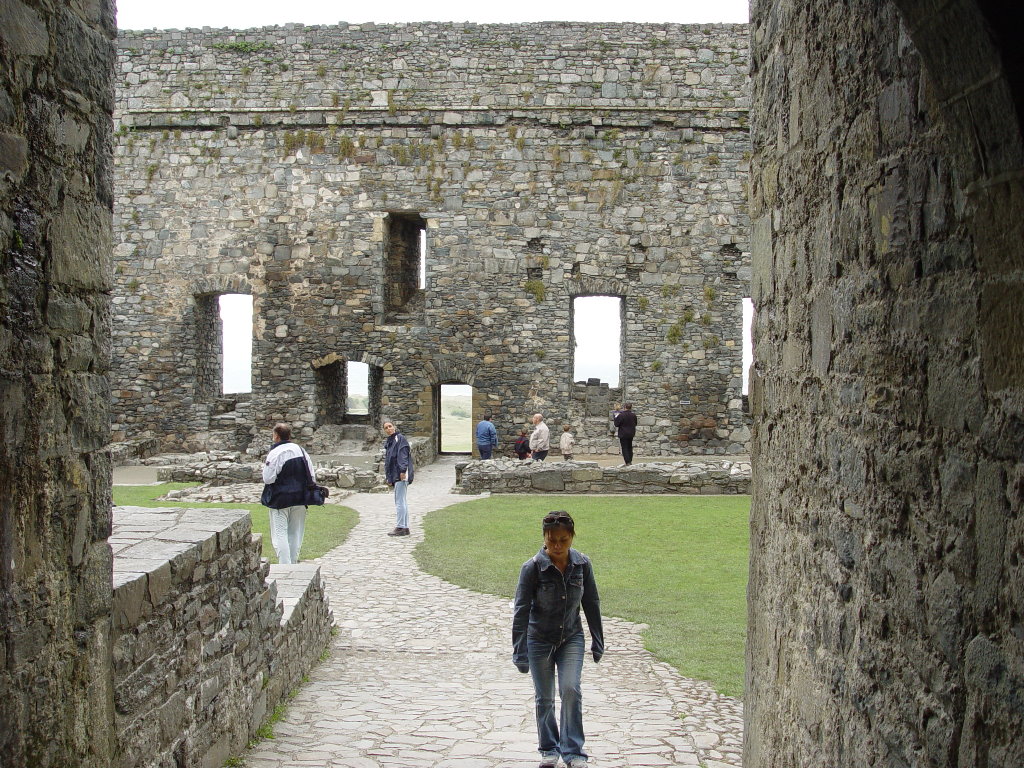
The gatehouse is the heart of the castle. Its twin towers held the main entrance, defended by a series of gates and portcullises, and above it were the castle’s best rooms, used by the constable and by important visitors. The inner ward is roughly square, with a round tower at each corner and the foundations of a great hall, chapel, kitchen and granary set against its walls. The outer ward wraps around it, and beyond that a further wall ran down the rock towards the sea.
The Way from the Sea
When the castle was built, the sea came much closer than it does today, and a fortified stairway, the Way from the Sea, ran down the rock to a dock at its foot. It was the castle’s lifeline. When Madog ap Llywelyn rose against English rule in 1294 and Harlech was cut off by land, it was supplied by ships from Ireland and held out. In the centuries since, the sea has retreated and the dunes and golf links of Morfa Harlech have formed on the land below, leaving the castle on its rock well inland.
Four centuries of sieges
| Year | What happened |
|---|---|
| 1283 | Building begins in May, months after the death of Llywelyn ap Gruffudd, the last native Prince of Wales |
| 1286 | At the peak of work, almost 950 men are on site, including 227 stonemasons and 115 quarriers |
| 1289 | The castle is essentially complete |
| 1294 to 1295 | Besieged during the revolt of Madog ap Llywelyn, and supplied by sea through the Way from the Sea |
| 1404 | Taken by Owain Glyndŵr, who makes it his home and court |
| 1405 | Glyndŵr holds a parliament at Harlech |
| 1409 | Recaptured by the English; Glyndŵr’s family are taken to the Tower of London |
| 1461 to 1468 | Held by the Lancastrians in the Wars of the Roses, the siege remembered in Men of Harlech |
| 1647 | The last mainland Royalist fortress to surrender in the Civil War, on 15 March |
| 1986 | Listed by UNESCO with Caernarfon, Conwy and Beaumaris |
| 2015 | A new footbridge restores the castle’s original entrance |
Owain Glyndŵr
In 1404 the castle fell to Owain Glyndŵr, who made it his family home and military headquarters, and in 1405 he held a parliament here. English forces under the future Henry V recaptured it in February 1409, and Glyndŵr’s wife and several of his daughters and grandchildren were taken to the Tower of London. Read more in Owain Glyndŵr at Harlech.
The Wars of the Roses
During the Wars of the Roses, Harlech was held for the Lancastrian cause from 1461 to 1468, the siege often described as the longest in British history. Margaret of Anjou had sheltered here in 1460: see A queen in flight. Its eventual surrender is said to have inspired the song Men of Harlech.
The Civil War
By the 17th century the castle was dilapidated, but it was garrisoned again for Charles I. It held out under siege from June 1646 until 15 March 1647, when its garrison of 44 men surrendered to the Parliamentarian general Thomas Mytton. Harlech was the last mainland Royalist fortress to fall, and its surrender marked the end of the first phase of the war. Parliament ordered it to be put beyond use, but much of it survived. See The last castle.
What to see
- The footbridge and gatehouse: since 2015 you enter as the builders intended, over a modern bridge on the line of the original drawbridge, and straight into the gatehouse.
- The wall walk: the classic view of the castle, with the town below, Tremadog Bay and the Llŷn Peninsula to the west and the Snowdon range to the north on a clear day.
- The corner towers: climb as many as you dare. The stairs are steep, narrow and uneven.
- The inner ward: look for the outlines of the great hall, chapel and kitchen against the walls.
- The Way from the Sea: look down from the west side to see the line of the stairway to the old dock.
- The Two Kings: in the gardens outside, Ivor Roberts-Jones’s sculpture of Bendigeidfran from the Mabinogi. See Branwen and the Two Kings.
Visiting
Getting in
The castle is entered from the visitor centre on the main road in the upper town, which occupies the former Castle Hotel opposite the gatehouse. It has the ticket desk, an exhibition, a café, a shop and accessible toilets with baby changing. From there, a footbridge around 25 metres long, with a gentle upward slope, leads straight into the castle. It opened in 2015, replacing long flights of timber steps, and occupies the position of the original drawbridge.
Opening times and prices
The castle is open all year apart from a few days over Christmas and New Year, with shorter hours in winter. Times and prices change through the year, so check the Cadw website before you go. Booking online is usually a little cheaper. Cadw members and children under five go free.
Parking
There is a small pay and display car park at the visitor centre, with two disabled bays and 23 other spaces, which fills quickly in summer. Other car parks are in the town and on the lower road. Parking in the lower town means a very steep walk up. See our parking guide.
Accessibility
The visitor centre has wide automatic doors, low desks and an accessible exhibition and café, and the footbridge gives level access into the castle. The ground level of the castle can be enjoyed from a wheelchair, but the towers and wall walks are reached by steep, narrow, uneven stairs. See accessible Harlech.
Dogs
Dogs are welcome at Harlech Castle. Keep them on a lead.
Tips for your visit
- Arrive at opening time in summer, before the coaches, and do the wall walk first.
- Bring a layer: the walls are exposed to the wind off the bay even on a sunny day.
- Allow time for the view. On a clear day you can pick out Yr Wyddfa, the Llŷn and Portmeirion.
- Combine the castle with the High Street and a walk down to the beach: see Harlech in a day.
- Come back at dusk to see the castle against the sunset from the gardens or the beach.
Photo gallery
Quick answers
How long do you need at Harlech Castle?
Most visitors spend one to two hours, including the wall walk and the exhibition. Allow longer if you want lunch in the café.
Who built Harlech Castle?
Edward I, between 1283 and 1289, to designs by his master mason James of St George.
Is Harlech Castle open in winter?
Yes. It opens all year apart from a few days over Christmas and New Year, with shorter hours in winter. Check Cadw for current times.
Are dogs allowed at Harlech Castle?
Yes, dogs are welcome. Keep them on a lead.
Is Harlech Castle wheelchair accessible?
The visitor centre and the footbridge into the castle are accessible, and the ground level can be enjoyed from a wheelchair. The towers and wall walks are only reached by steep, narrow stairs.
Where do I park for Harlech Castle?
There is a small pay and display car park at the visitor centre, with more parking in the town. See our parking guide.